There’s an unglamorous detail sitting at the centre of organ transplantation that most people never think about: once a kidney or liver leaves the body, it travels in a plastic cooler, suspended in saline solution, slowly deteriorating. It’s one of the most consequential journeys in medicine, and it happens in conditions not so different from packing a sandwich for lunch.
The problem is almost embarrassingly simple. Blood carries oxygen. Saline doesn’t — not well, anyway. The oxygen concentration in a standard preservation solution sits at roughly forty times lower than in blood. Without adequate oxygen, organs become hypoxic (oxygen-starved), and quality starts to decline. That’s why livers typically need to be transplanted within 12 to 24 hours. Some organs have as little as four to six.
A research group at Harvard is working on something that sounds like a chemistry thought experiment: what if you could make water carry oxygen the way blood does?
The Science of Tiny Holes
Jared Mason’s lab at Harvard University works with porous nanomaterials — materials engineered with nanoscale holes throughout their structure. Think honeycomb, but at a scale invisible to any microscope you’d find in a secondary school classroom.
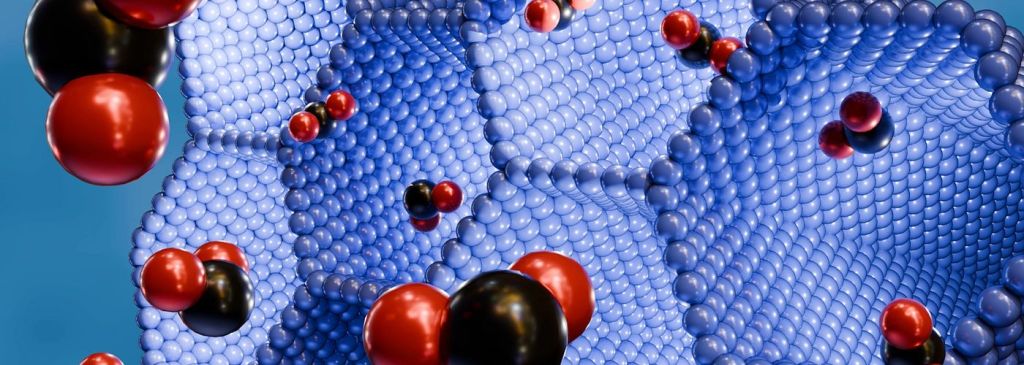
These particular pores are designed to be hydrophobic on the inside — water-repelling. Liquid water can’t flood them. But gas molecules, including oxygen, can sit happily in those spaces at high concentration. Suspend these nanoparticles in water, and you get something that looks like an ordinary fluid but contains pockets of empty space packed with gas.
Mason’s team calls this microporous water. The numbers are worth sitting with: adding less than four percent by volume of these particles creates a solution with the same oxygen-carrying capacity as blood. Ninety-six percent water. Blood-equivalent oxygen.
Why This Matters
The immediate goal isn’t a permanent blood substitute. It’s more focused than that: replace the standard saline in organ preservation with something that actually keeps donated organs oxygenated while they’re outside the body.
Animal studies using rat livers — conducted in collaboration with Massachusetts General Hospital — have shown promising improvements in organ quality after storage. The team is also exploring active perfusion, pumping the fluid through the organ to simulate circulation, alongside the simpler approach of just swapping what’s in the cooler.
Worth noting: organ transplantation is a heavily regulated, appropriately cautious field. Moving from rat models to human applications takes years of safety and efficacy work, and that’s as it should be. But the underlying principle is sound, and the early results are genuinely interesting.
How It Started
What’s perhaps most instructive about this research is where it came from. Mason’s group wasn’t initially trying to solve organ preservation. They were working on a materials chemistry question: how do you transport gases efficiently in water? The biomedical connection came later.
That’s often how useful science actually works. You solve a problem with molecular precision, and then the world figures out where the answer fits.
Sources for fact-checking:
- Mason Research Group, Harvard University — mason.chemistry.harvard.edu
- Search: “microporous water oxygen nanoparticles Mason Harvard” for primary literature
- Organ Procurement and Transplantation Network (OPTN) — optn.transplant.hrsa.gov (organ viability windows)
- Nanoscope podcast, International Institute for Nanotechnology at Northwestern University (episode featuring Jared Mason)
- General background on organ hypoxia and cold ischemia: search “cold ischemia organ preservation review” in PubMed

