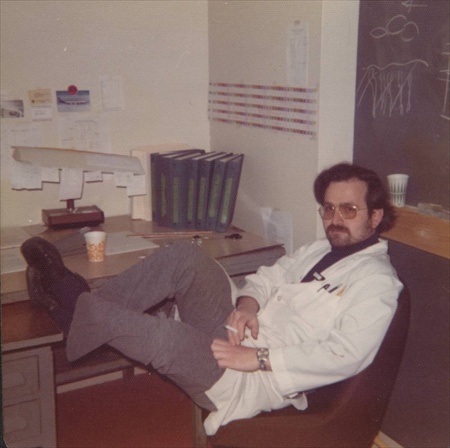
On a Saturday evening in 1967, a teenage boy in Greece was watching the ten o’clock news when the presenter announced that a surgeon named Christiaan Barnard had, in Cape Town, cut the heart out of one person and placed it inside another. The boy was mesmerised — not by the drama of it, but by the engineering question it raised. How do you keep a heart alive long enough to do that? Where was the support from the life sciences? From engineering?
That boy was Nicholas Peppas, and that question sent him to MIT.
Fifty-five years later, he is a professor of engineering and medicine at the University of Texas at Austin, the 2025 recipient of the Kabiller Prize in Nanoscience and Nanomedicine — the world’s largest monetary award in the field, carrying a prize of $250,000 — and one of the most quietly influential figures in modern drug delivery. His lab has contributed to work on oral insulin, multiple sclerosis therapies, Crohn’s disease, intraocular lenses, and the blood-brain barrier. He is also, somewhat improbably, more cited in opera criticism than in nanotechnology. But we’ll get to that.
The problem with insulin
Insulin is a fragile molecule. Take it orally and it sticks to the lining of your mouth, gets broken down in your stomach, and never reaches your bloodstream in any useful form. For decades, injection was the only option — and patients, unsurprisingly, found this less than ideal.
Peppas began working on oral delivery systems around 1979, alongside colleagues including Robert Langer (now at MIT, also a Kabiller Prize winner). The approach: design polymer networks — materials engineered to survive the acidic environment of the stomach and release their cargo further along the digestive tract, intact and active. He is quick to note this was never a solo effort. A community of roughly ten researchers worldwide was pursuing similar ideas at the same time, sharing beers in Boston delicatessens and ideas across continents.
Oral insulin is not yet a clinical reality, but the foundational work is there, and it has shaped how an entire field thinks about protecting sensitive molecules in the body.
When research becomes personal
In December 1991, Peppas was diagnosed with multiple sclerosis. The available treatment at the time required weekly intramuscular injections — and naturally, he began asking whether his own polymer delivery research might help. (It turned out to be a misdiagnosis: he has celiac disease, which can mimic some neurological symptoms and is, as he puts it, controllable with diet. He remains characteristically undramatic about the whole thing.)
What the episode illustrates is something he returns to repeatedly: the best science often begins with someone in your immediate world — a student, a secretary, a family member — for whom the current standard of care simply isn’t good enough.
His students, who call themselves “Pepsters” (a riff on polymers and Peppas), are selected not primarily for grades, but for that quality. “If I hear somebody say I want to start a company, it’s okay,” he said in a recent podcast interview, “but my number one attraction is somebody who says: I have a person in my family who suffers from this disease. Can we do something better?”
The other life
Ask Peppas about his work and he will, eventually, mention opera. His mother was a professor of French literature. His father, an economist. He trained as a singer in Athens, has given academic seminars in Italian, French, German, and Russian, and by his own admission has more publications on opera and classical music than on nanotechnology.
He doesn’t treat this as a quirk or a hobby. He draws a direct line between the two: the structure of a Verdi opera, the way a theme develops and resolves, the precision required of a composer — these things, he suggests, inform how he thinks about molecular systems. Architecture at a different scale.
What comes next
At 76, Peppas is working on AI-assisted drug design and blood-brain barrier delivery. His son, 21 years old and at Carnegie Mellon, regularly challenges his assumption that AI will solve everything. (“Daddy, there are certain things we will not be able to solve.”) He finds this encouraging.
The future, as he sees it, is personalised: treatments designed not just for a disease, but for the specific immune system of a specific patient. Convergence, he calls it — chemists, biologists, medical doctors, geneticists, engineers, all working on the same problem at once. No single lab can do it alone.
He told one more story before the interview ended. Around 28 years ago, he helped develop an intraocular lens — the artificial lens used to replace the clouded one in cataract surgery. After the first successful implant, the patient came back for her follow-up. The bandage came off. She could see. She found Peppas in the room and grabbed his hands.
“You gave me my life back. I can see my granddaughter becoming a bride.”
Sources & Further Reading
- International Institute for Nanotechnology — Award announcement (iinano.org)
- Peppas Lab, University of Texas at Austin — peppaslab.che.utexas.edu
- “The Scientist Who Thinks Like a Musician” — Podcast episode, 6 October 2025
- Peppas, N.A. et al. — “Hydrogels in Biology and Medicine: From Molecular Principles to Bionanotechnology” — Advanced Materials, 2006
- Khutoryanskiy, V.V. — Review of oral drug delivery challenges — Macromolecular Bioscience, various issues

