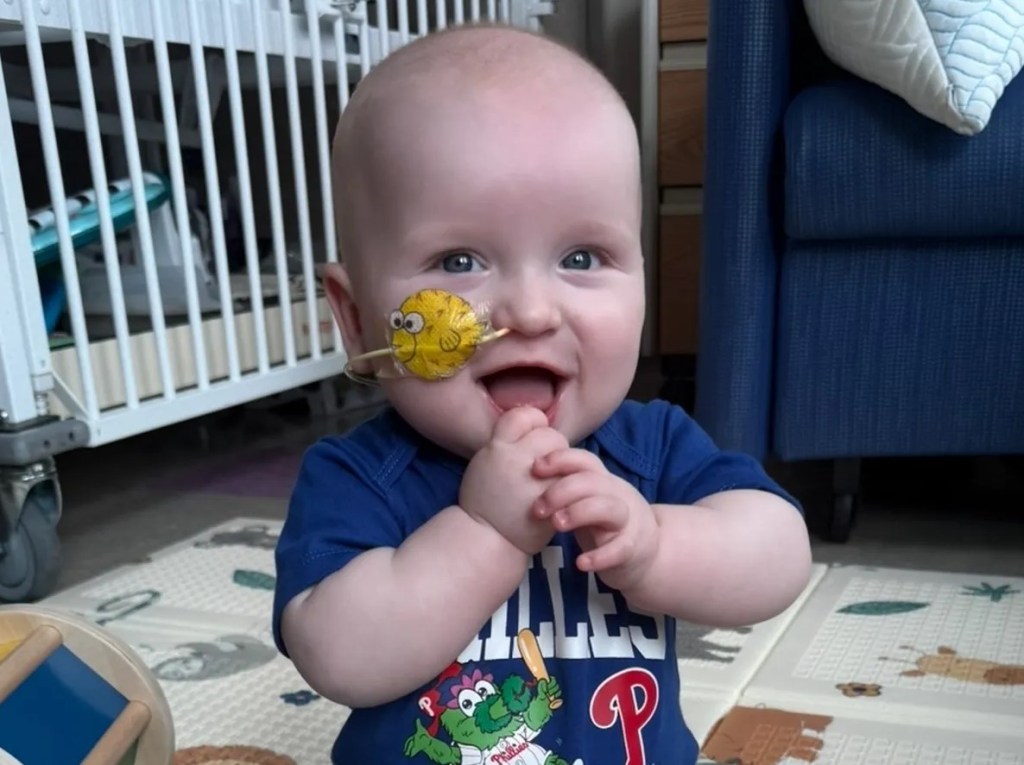
There is a version of this story that ends badly. It almost did.
KJ Muldoon was born with severe carbamoyl phosphate synthetase 1 deficiency — a mouthful of a diagnosis that essentially means his liver could not process nitrogen properly. Without that function, ammonia builds up in the blood. At high enough concentrations, ammonia is neurotoxic. In infants, it is frequently fatal. The standard treatment for severe CPS1 deficiency is a liver transplant, but KJ was too young to receive one. There was, at the point of diagnosis, no approved therapy for his specific condition. There was not even a clinical trial.
What happened next is worth paying attention to — not because it is a feel-good story (though it is), but because it demonstrates something genuinely new about what medicine can now attempt.
What actually happened
Researchers at the Children’s Hospital of Philadelphia, led by physician-scientist Kiran Musunuru at the University of Pennsylvania, designed a bespoke gene-editing therapy specifically for KJ. Not a therapy adapted from an existing drug. Not a repurposed treatment. A therapy built from scratch, targeting the precise mutations found in his CPS1 gene.
The tool used was a base editor — a refined cousin of the CRISPR-Cas9 system most people have heard of. Where standard CRISPR cuts DNA (which can introduce errors), base editing makes a more surgical change: it chemically converts one DNA letter to another without cutting the double helix. Think of it as correcting a typo rather than cutting out a sentence and hoping the paragraph still makes sense.
The edited instructions were packaged into lipid nanoparticles — the same fatty delivery vehicles used in the mRNA COVID-19 vaccines — and infused twice, at seven and eight months of age. Within weeks, KJ’s condition began to improve. He could tolerate more protein. He needed less medication. He started sitting upright. After 307 days in hospital, he went home.
Why this matters beyond KJ
The instinct is to call this a miracle. It is more useful to call it a proof of concept.
The timeline alone is striking. Taking a gene therapy from idea to FDA-approved clinical-grade drug typically takes years. Here it took six months, made possible through partnerships with the Innovative Genomics Institute and Danaher Corporation, and expedited FDA review given the urgency of KJ’s case.
What Musunuru and his colleagues are now pursuing is something broader: a standardised platform that could be rapidly customised to treat any inborn error of metabolism affecting the liver. The logic is elegant — if the delivery system (LNPs), the editing machinery (base editors), and the regulatory pathway are all established, the only variable that changes between patients is the targeting sequence. Swap in a new guide RNA, correct a different mutation, treat a different child.
There are, of course, caveats. KJ’s long-term outcomes remain unknown. Base editing is precise but not infallible. Scaling personalised therapies affordably and equitably is a separate and significant challenge. One success, however extraordinary, is not a clinical trial.
But it is a reasonable signal that N-of-1 medicine — therapies designed for a single patient — is no longer purely theoretical. It is happening, in real hospitals, to real children, with real results.
KJ turned ten months old on the first of June. He went home the same week.
Welcome home, baby KJ ❤
Sources
- Musunuru, K. et al. (2025). Personalized base editing for a patient with CPS1 deficiency. New England Journal of Medicine. nejm.org
- Grinstein, J.D. (2025). First Personalized CRISPR Gene Editing Therapy Patient Baby KJ Discharged. Inside Precision Medicine. insideprecisionmedicine.com
- Marks, P. (2025). Editorial: Gene editing for rare metabolic disorders. New England Journal of Medicine. nejm.org
- Innovative Genomics Institute / Danaher-IGI Beacon for CRISPR Cures: innovativegenomics.org
- Children’s Hospital of Philadelphia — CPS1 Deficiency information: chop.edu

