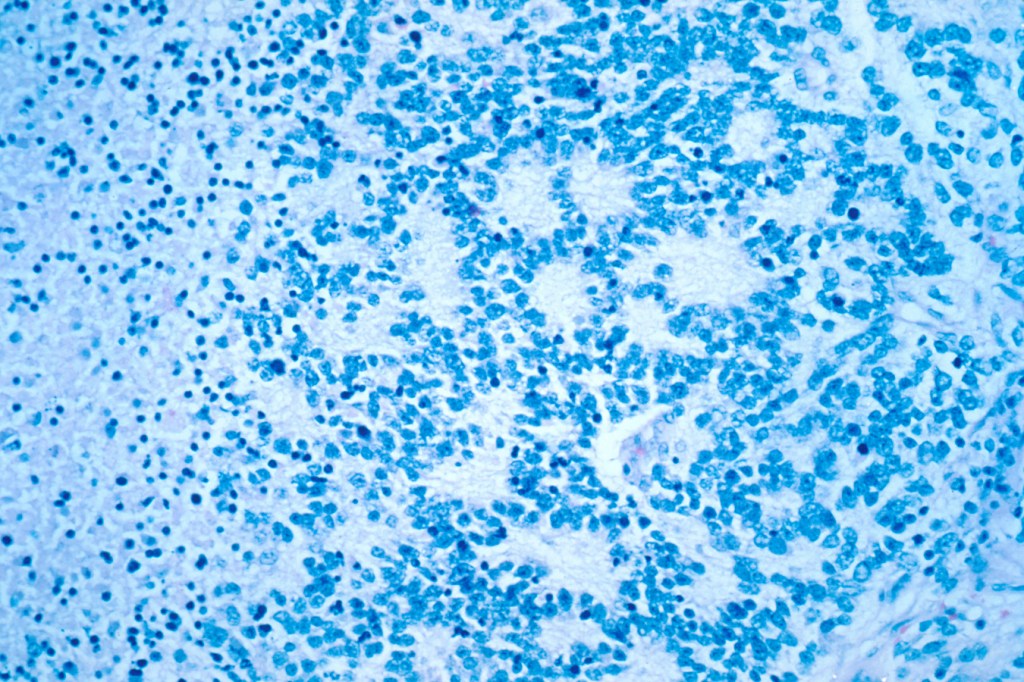
There are few things in oncology more sobering than paediatric cancer statistics. Neuroblastoma — a tumour that develops in immature nerve cells and typically affects children under five — accounts for around 15% of cancer-related deaths in children. Despite treatment advances, roughly 80% of patients with aggressive disease don’t achieve sustained responses. That figure has been pushing researchers toward less conventional approaches for years.
One of those approaches just cleared a meaningful milestone.
A team at RCSI University of Medicine and Health Sciences in Dublin has developed an mRNA vaccine for neuroblastoma — reportedly the first of its kind — and published early results that are worth paying attention to. The study appeared in Molecular Therapy Oncology in June 2026.
The basic idea
mRNA vaccines work by delivering genetic instructions into cells, prompting them to produce a specific protein. In the context of cancer, the goal is to train the immune system to recognise and attack tumour cells carrying that protein. You’ll recognise the concept from COVID-19 vaccines, where the same logic was applied to a viral spike protein.
Here, the target is glypican-2 (GPC2) — a protein found at high levels on neuroblastoma cells and not much else, which makes it a useful flag for immune targeting.
The delivery twist
Most mRNA vaccines use lipid nanoparticles (LNPs) as their delivery vehicle — essentially tiny fat droplets that carry the mRNA into cells. This team took a different route, using self-assembling peptide nanoparticles called RALA.
RALA is named after its repeating amino acid sequence: arginine, alanine, leucine, alanine. These amino acids arrange themselves into stable nanoparticles that wrap around and protect the mRNA cargo. Once inside a cell, the nanoparticle reacts with the intracellular environment, changes shape, and releases the mRNA. Think of it less as a fat droplet and more as a molecular origami box that opens on cue.
The reported advantages over LNPs include room temperature stability (logistically significant for real-world use), no immune response to the RALA carrier itself, high encapsulation efficiency, and lower cost. There’s also no restriction on how much or how many different mRNA sequences can be loaded in — which matters for the personalisation angle.
What the data shows
In mouse models, vaccination with RALA/mGPC2 generated a specific immune response against GPC2 — measurable increases in immune signalling molecules and activation of both CD4+ and CD8+ T cells, the cells that coordinate and carry out immune attacks. Tumour development was delayed by 10–11 days, and tumour volume was reduced by 70% compared to unvaccinated controls.
The lead researcher, Olga Piskareva, noted that the 10–11 day delay in mice likely maps to roughly two years in preadolescent humans — though that extrapolation carries the usual caveats about cross-species comparisons. More importantly, she flagged it as proof of concept rather than ceiling: different dosing schedules and combination approaches could extend those results further.
What comes next
The team plans to optimise dosing and vaccination frequency, and to characterise the immune response in more detail before moving toward clinical trials. There’s also meaningful potential in the personalisation angle — in principle, a patient’s tumour could be profiled, relevant targets identified, and a tailored mRNA cocktail assembled. Piskareva described it as building with LEGO bricks. It’s a good analogy: modular, combinable, and scalable.
This is early-stage work, and the road to clinical use is long. But it’s a well-reasoned step in the right direction for a cancer that has needed one.
Sources
- Cowen, L. “Peptide-Based mRNA Vaccine Offers New Hope for Neuroblastoma Treatment.” Inside Precision Medicine, 24 June 2026.
- Original study: RCSI team, Molecular Therapy Oncology (June 2026) — search “RALA mGPC2 neuroblastoma mRNA vaccine Piskareva”
- Brodeur, G.M. “Neuroblastoma: biological insights into a clinical enigma.” Nature Reviews Cancer, 2003. (Background on neuroblastoma biology)
- Pardi, N. et al. “mRNA vaccines — a new era in vaccinology.” Nature Reviews Drug Discovery, 2018. (mRNA vaccine delivery overview)
- Conor Foley Neuroblastoma Cancer Research Foundation — for patient and disease context: conorfoley.ie

