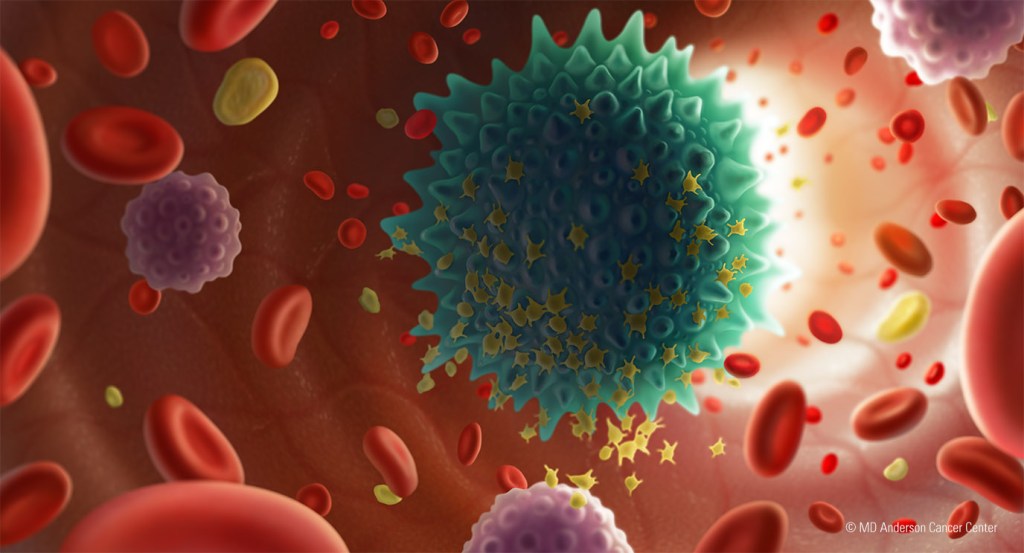
There’s something quietly remarkable about the idea that cancer might leave traces in your blood long before you notice anything is wrong. Not obvious signs — just fragments. Tiny pieces of DNA shed by dying tumour cells, drifting through your bloodstream in concentrations so low they’ve historically been almost impossible to detect.
That’s the problem circulating tumour DNA (ctDNA) research has been trying to solve for years. And in early 2023, Oxford Nanopore Technologies and a Dutch startup called Cyclomics announced something that might represent a meaningful step forward.
The basics, quickly
When cells die — including cancer cells — they release their DNA into the bloodstream. This cell-free DNA (cfDNA) circulates freely, and a small fraction of it originates from the tumour itself. That fraction is called ctDNA, and hidden within it are the specific mutations that fingerprint a particular cancer.
The catch: “small fraction” is doing a lot of work in that sentence. In many patients, ctDNA makes up less than 1% of all the cell-free DNA in the blood. Sometimes far less. Detecting a meaningful signal against that much noise requires either very clever chemistry, very sensitive technology, or both.
What CyclomicsSeq actually does
CyclomicsSeq — the workflow developed jointly by Oxford Nanopore and Cyclomics — uses nanopore sequencing, a technology that reads DNA by threading it through a tiny biological pore and measuring the changes in electrical current as each base passes through. It’s fast, relatively low-cost, and doesn’t require the elaborate preparation that some other sequencing approaches demand.
The clever part isn’t just the sequencer. CyclomicsSeq targets short cfDNA fragments in the 200 base pair range, and is designed to detect mutations at frequencies as low as 0.02% — a sensitivity level that makes most conventional approaches look rather blunt by comparison.
In a proof-of-concept study published in NPJ Genomic Medicine, the team demonstrated near-100% accuracy in detecting TP53 mutations (a tumour suppressor gene that’s mutated in a wide range of cancers) in head-and-neck cancer patients. The entire workflow took around three days. That’s not instant, but it’s considerably faster than many existing methods.
Why this matters
Monitoring cancer recurrence today often means repeat scans — CT, MRI, PET — which are expensive, time-consuming, and not exactly low-stress for the patient. A blood draw that could do the same job, or at least meaningfully complement it, would be a genuine improvement in how cancer follow-up care works.
There’s also something useful about the speed. Oncologists at Erasmus Medical Center in the Netherlands are among those assessing whether the quick turnaround — not having to wait for samples to batch — could change clinical decision-making in a practical way.
That said, this is still early. The developer access programme launched in March 2023 targets researchers rather than clinicians, and the companies are clear that further optimisation is ongoing. Detection of methylation patterns — which can add another layer of cancer-specific information — is listed as a future goal.
The honest caveat
Liquid biopsy technology has been generating excitement for a decade, and translating promising proof-of-concept results into robust, clinically validated tools takes time. CyclomicsSeq is genuinely interesting — the sensitivity figures are notable, and the use of existing nanopore hardware lowers one obvious barrier to adoption. But “developer access” is a long way from routine clinical use.
Sources
- Oxford Nanopore Technologies & Cyclomics press announcement, BusinessWire, March 2023
- Bleijs et al., NPJ Genomic Medicine (2021) — CyclomicsSeq proof-of-concept study for TP53 monitoring in head-and-neck cancer
- Oxford Nanopore Technologies — nanoporetech.com
- Cyclomics — cyclomics.com
- National Cancer Institute overview of liquid biopsy and ctDNA — cancer.gov

